
- Materials depicted
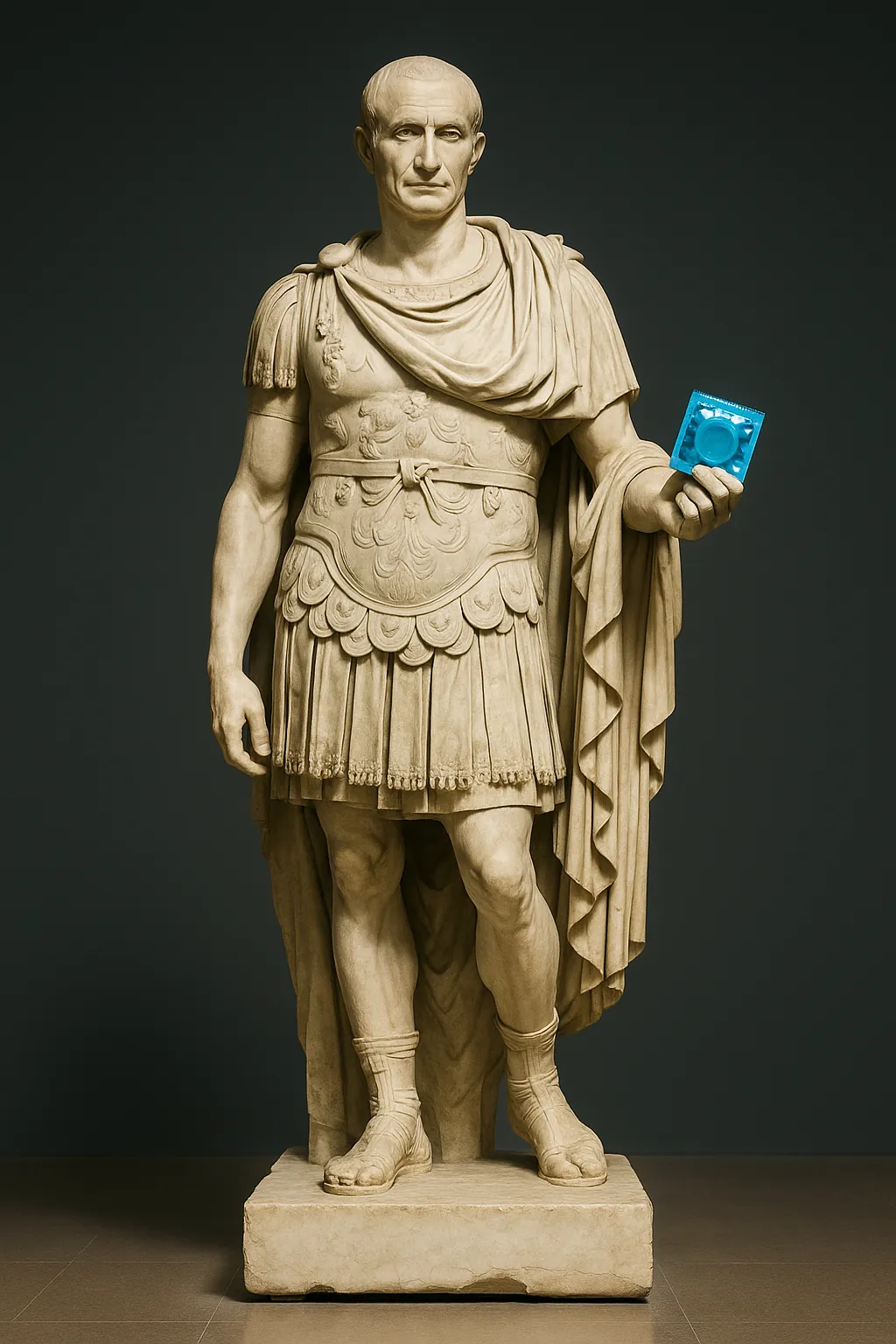
- Marble, latex, foil wrapper.
- Provenance
- Vending machine outside an all-night chemist’s, Rome. Out of order since 86 BC.
- Condition report
- Good. Wrapper intact. Never used.
- Related work
- Cuirassed statue of Julius Caesar, Trajanic period, Palazzo Senatorio, Rome.
Commentary
Julius Caesar, general and later dictator, was assassinated on 15 March 44 BC as a session of the Senate opened in the Curia of Pompey. Suetonius counts twenty-three wounds; according to the physician Antistius, only one was fatal.
Among the conspirators was Marcus Brutus, son of Servilia, the woman Caesar loved above all others: he gave her a pearl worth six million sesterces. Plutarch reports that Caesar had some reason to believe Brutus was his son.
‘You too, child?’ According to Suetonius, Caesar merely groaned; some, he adds, credit him with these words, in Greek. Shakespeare later gave him Latin. The line remains uncertain. So does the paternity.
Previous version
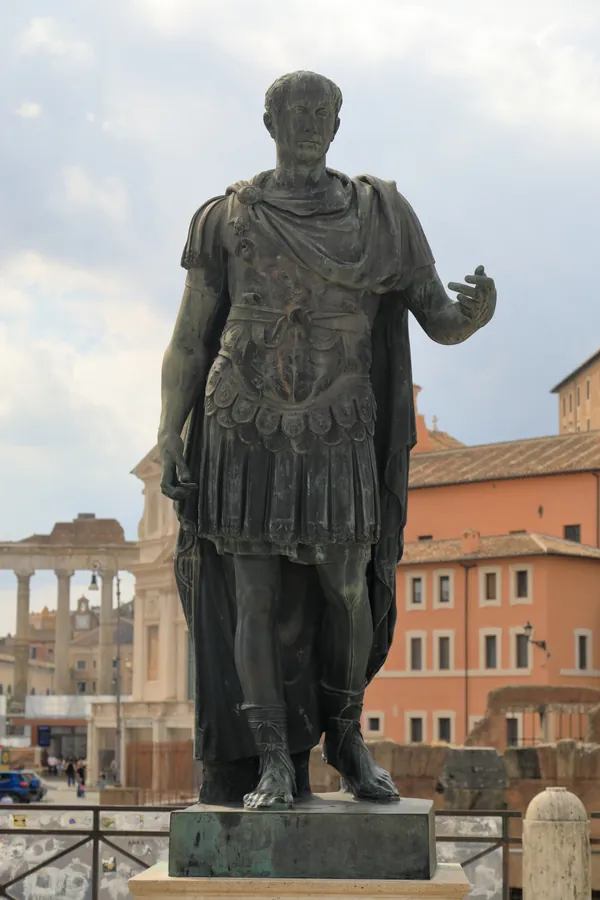
Julius Caesar, Via dei Fori Imperiali, Rome. Bronze copy (1932) of a Trajanic-era marble on the Capitoline. The left hand is empty.
Photo: Falk2, via Wikimedia Commons, resizedLicence CC BY-SA 4.0Image source
See both versionsReferences3 references
Digital composition by Aël, updated with the help of artificial intelligence. Glitch: original.