The Refectory
The Last Supper
The last meal of Christ with the twelve apostles, on the eve of his death.
Visiting slot
Time remaining
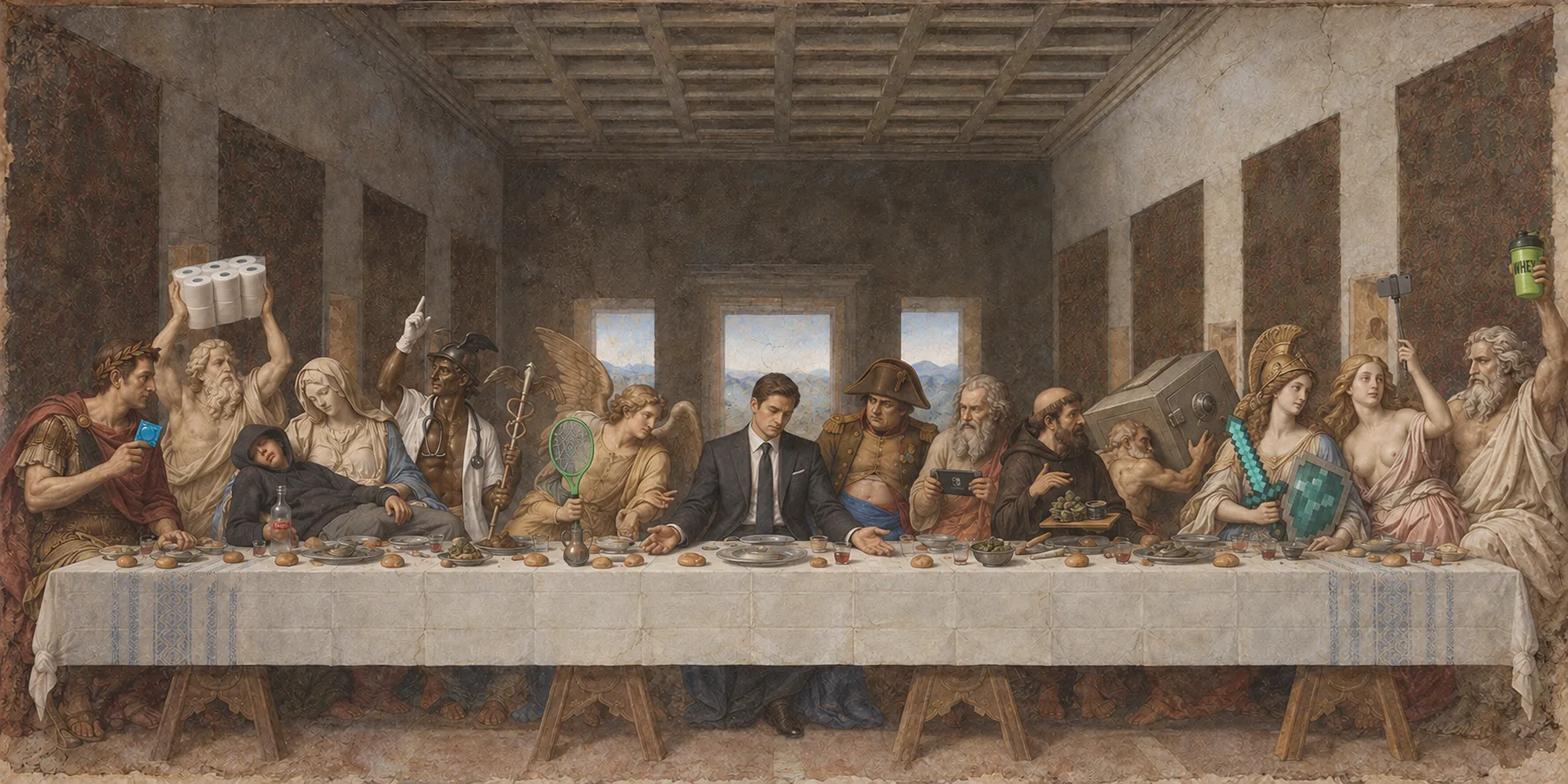
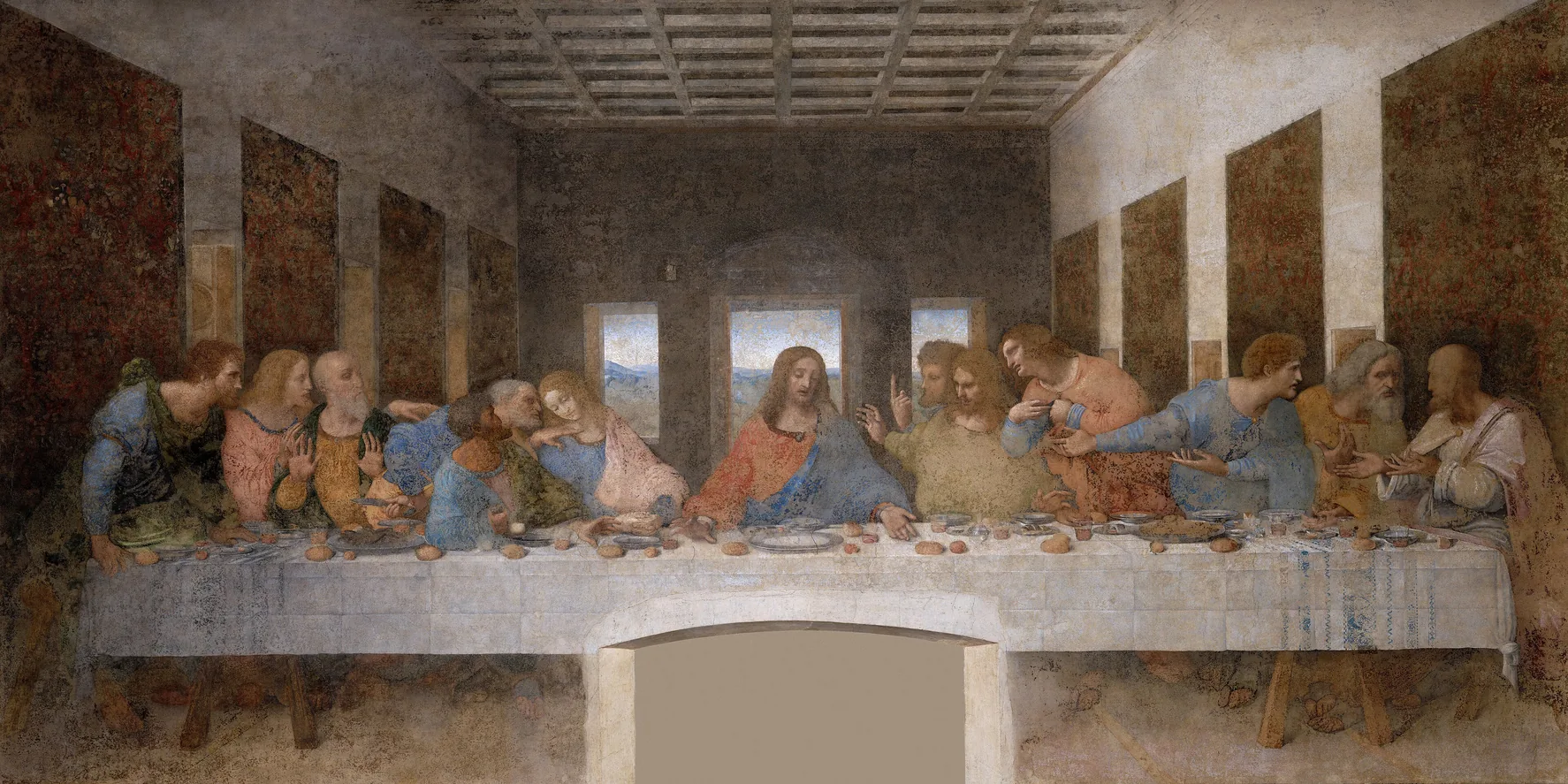
Previous version 1495–1498
Current version 2026
Your fifteen-minute slot has ended. Please vacate the refectory for the next group.
Leonardo da Vinci painted it between 1495 and 1498 on the wall of the refectory of Santa Maria delle Grazie, in Milan. The collection has been invited.
Seating plan
From left to right, following the traditional identification of the apostles.
| Place | Previous version 1495–1498 | Current version 2026 |
|---|---|---|
| 1 | Bartholomew | Julius Caesar |
| 2 | James the Less | Moses and the Golden Calf |
| 3 | Andrew | Pietà |
| 4 | Judas IscariotHe kept the common purse (John 13:29). | Flying MercuryGod of merchants, travellers and thieves. |
| 5 | Peter | Place vacant. |
| 6 | John | Saint Michael Vanquishing the Devil |
| 7 | Jesus | A man in a suit. Unidentified. |
| 8 | Thomas | Napoleon I |
| 9 | James the Greater | Plato |
| 10 | Philip | The Seated Scribe |
| 11 | Matthew | The Punishment of Sisyphus |
| 12 | Jude Thaddeus | Justice |
| 13 | Simon the Zealot | Aphrodite, known as the Venus de Milo |
| 13a | — | Zeus EnthronedEnd of the table. Extra place set. |
Romulus and Remus sent their apologies.
Catalogue entry
Leonardo da Vinci painted the Last Supper between 1495 and 1498 for Ludovico Sforza, Duke of Milan, on the wall of the Dominican refectory of Santa Maria delle Grazie. He did not paint it in true fresco but in tempera on a dry wall: it began to flake in his own lifetime.
In 1652 a doorway was cut beneath the table, removing Christ’s feet. In August 1943 a bomb tore through the refectory; protected by sandbags, the wall held.
The last restoration took twenty-one years, from 1978 to 1999. Since then it has been visited in small groups, for fifteen minutes. The update took one night.
Condition report: Good. The doorway cut in 1652 was removed during the update.
Previous version: Leonardo da Vinci, The Last Supper, 1495–1498, tempera and oil on plaster, refectory of Santa Maria delle Grazie, Milan (reproduction: Wikimedia Commons, public domain). Current version: Aël, draft.