
- Materials depicted
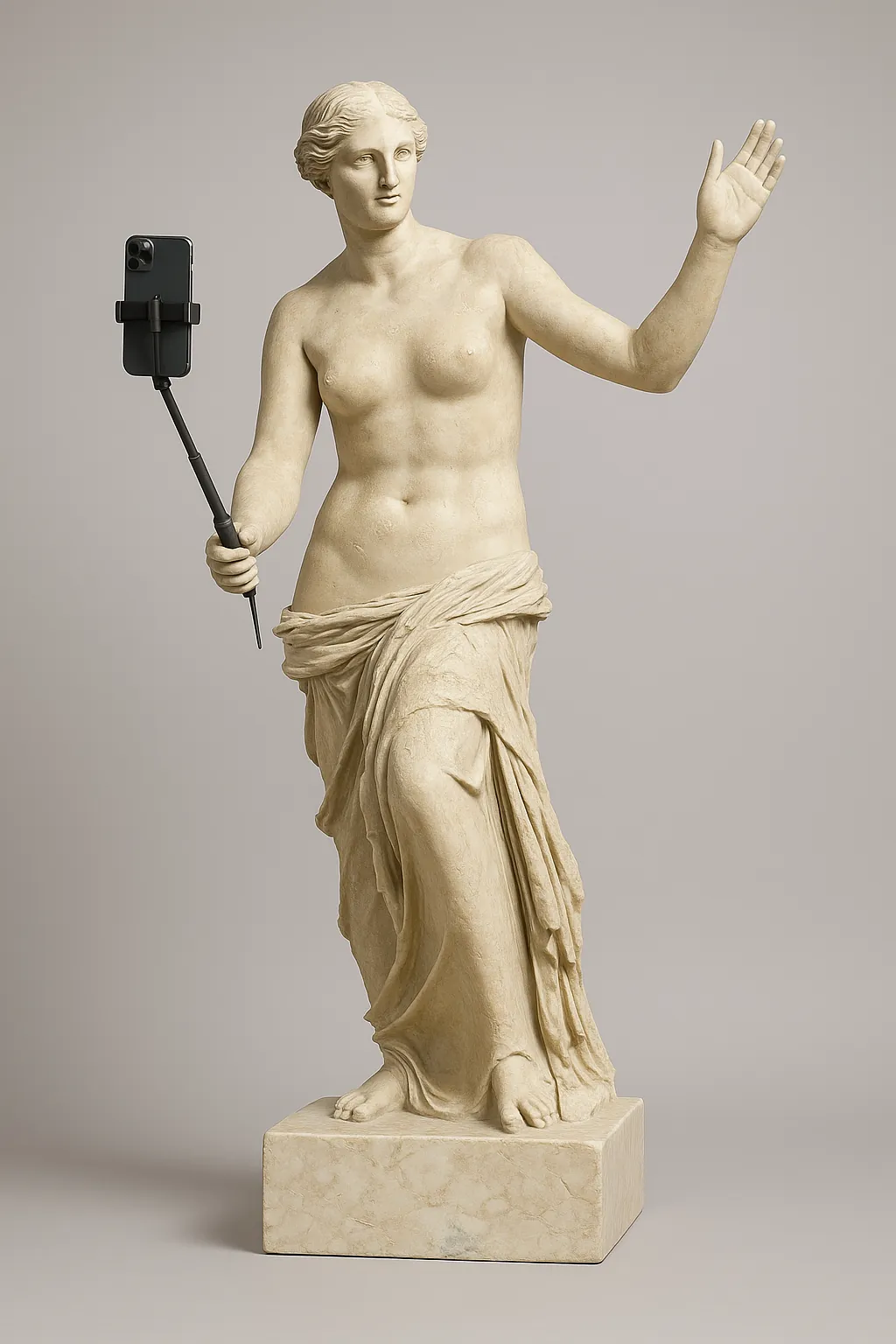
- Parian marble, anodised aluminium, toughened glass.
- Provenance
- Island of Milos, 1820. Traced again in 2026: her location was set to public.
- Condition report
- Arms: recovered. Battery: 12%.
- Related work
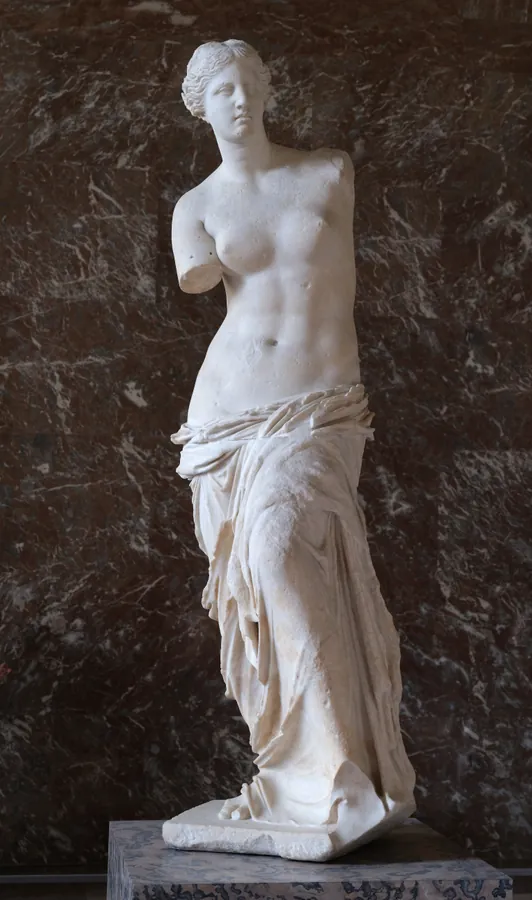
- Aphrodite, known as the Venus de Milo, c. 150–125 BC, Musée du Louvre, Paris.
Commentary
Carved around 150–125 BC in marble from Paros, the statue was found in 1820 by a farmer, in a field on the island of Milos. Presented to Louis XVIII, it entered the Louvre in 1821.
Her arms are missing. Fragments found with her, including a hand holding an apple, are often attributed to her; other reconstructions give her a shield, in which she would have admired her own reflection. Goddess of love and beauty, Venus is frequently shown contemplating herself.
Previous version
Aphrodite, known as the Venus de Milo, c. 150–125 BC, Musée du Louvre. Found in 1820, already armless.
Photo: Shonagon, via Wikimedia CommonsLicence CC0Image source
See both versionsReferences2 references
Digital composition by Aël, updated with the help of artificial intelligence. Glitch: original.