
- Materials depicted
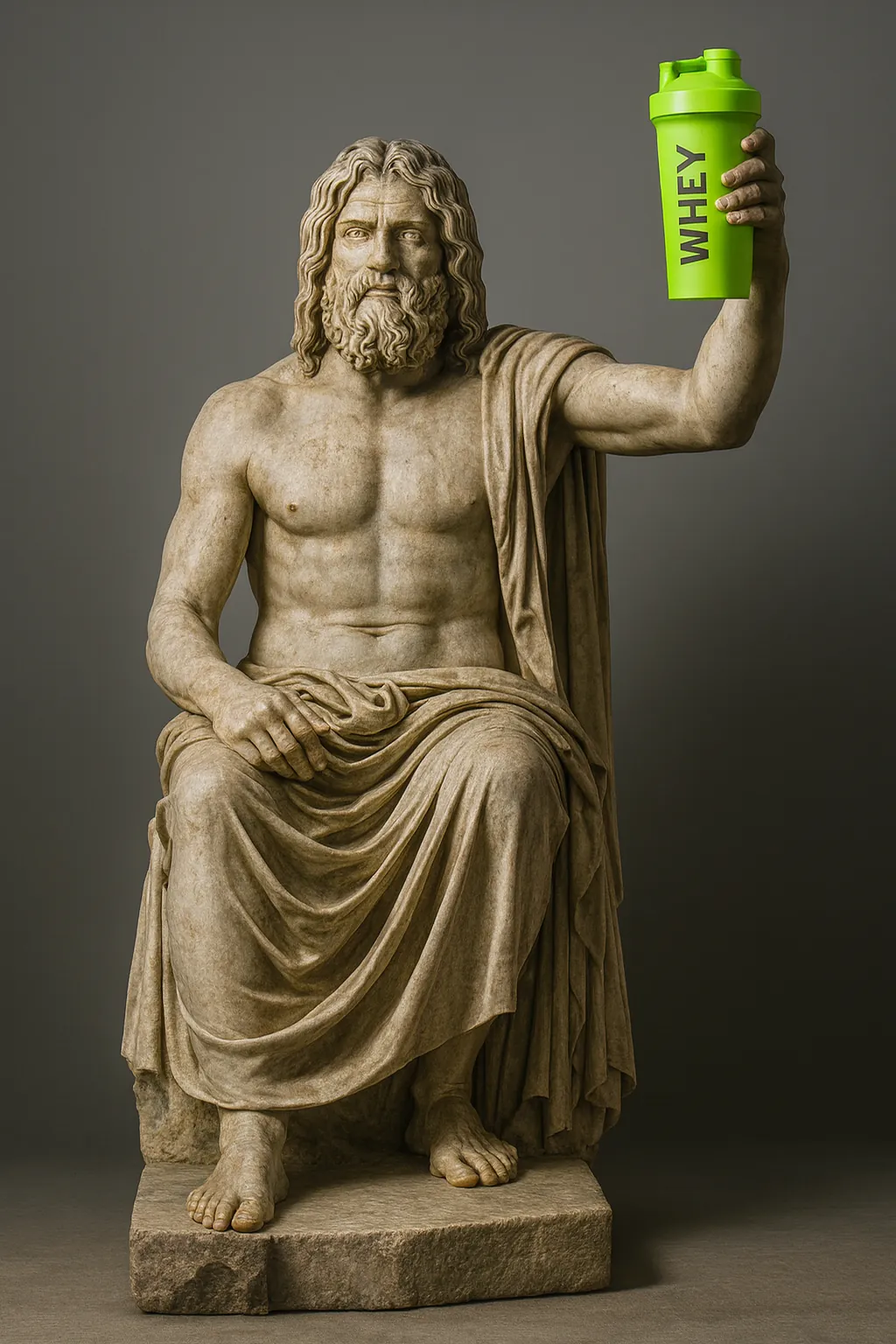
- Marble, BPA-free food-grade polypropylene.Capacity of vessel: 700 ml.
- Provenance
- Locker no. 114, a gym on an out-of-town retail park. Never claimed. Entered the collection in 2019.
- Condition report
- Good. Lid screwed on, spout closed. Do not shake.
- Related work
- Phidias, Zeus at Olympia, c. 435 BC, known from ancient descriptions.
Commentary
From Olympus, Zeus rules over gods and men. In Book VIII of the Iliad he issues a challenge: were all the gods to hang together from a golden chain, they could not drag him down, whereas he, if he chose, could haul them all up, with the earth and the sea besides.
Sculptors liked to show him seated. The Zeus that Phidias made for Olympia was so large that, according to Strabo, had he stood up he would have taken the roof off the temple. Details of his training programme have never been released.
Previous version
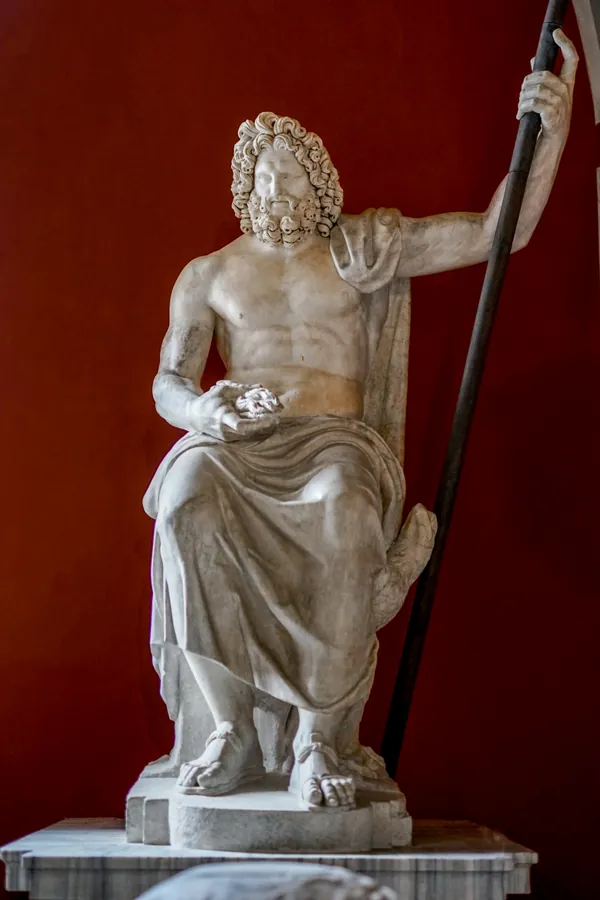
The so-called Verospi Jupiter, marble, Roman period, Vatican Museums. The torso is ancient; the arms and legs date from the 18th century.
Photo: Fabrizio Garrisi, via Wikimedia Commons, resizedLicence CC BY-SA 4.0Image source
See both versionsReferences3 references
Digital composition by Aël, updated with the help of artificial intelligence. Glitch: original.